
Learn how to reduce overwhelm during homeschool lessons with simple, ADHD-friendly strategies that improve focus, calm, and learning flow for children and parents.
Homeschooling can be deeply rewarding, but it can also feel mentally exhausting. Overwhelm shows up quietly at first. A child zones out. A lesson stretches longer than planned. Frustration builds on both sides. Before you know it, the day feels heavy and unproductive.
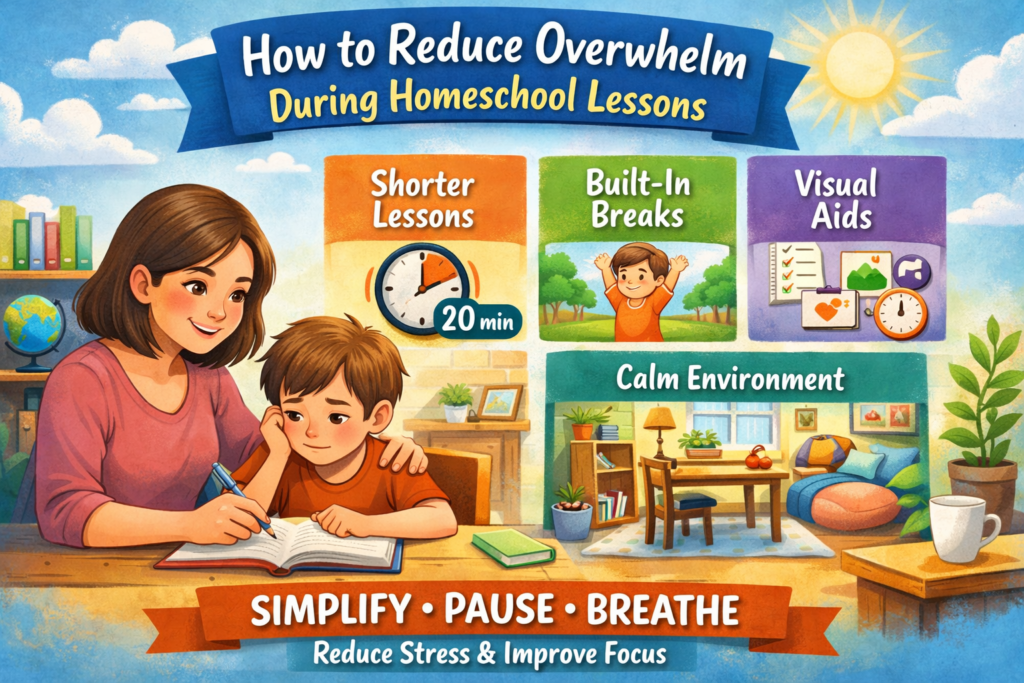
Overwhelm during homeschool lessons does not mean you are doing something wrong. It usually means the learning environment or expectations are asking too much, too fast, or in the wrong way. The good news is that small shifts can dramatically reduce stress and make learning feel lighter and more sustainable.
This guide walks you through practical ways to reduce overwhelm during homeschool lessons while protecting your child’s energy and your own.
Why Overwhelm Happens During Homeschool Lessons
Before fixing the problem, it helps to understand it.
Overwhelm often comes from cognitive overload. When a child is expected to process too much information at once, their brain struggles to organize, prioritize, and respond. This is especially true for younger learners and children with ADHD, anxiety, or sensory sensitivities.
Common causes include:
• Long lessons without breaks
• Too many subjects in one sitting
• Abstract instructions without visual support
• Pressure to “finish” instead of understand
• Sensory distractions in the learning space
When overwhelm sets in, learning shuts down. Pushing harder rarely helps.
Know More About Your Child’s Auditory Processing Disorders (APD / CAPD)
How to Reduce Overwhelm During Homeschool Lessons With Shorter Learning Blocks
One of the most effective ways to reduce overwhelm during homeschool lessons is shortening lesson length.
Speech-Language Disorders: Support your child’s speech development with tools designed to build clarity, confidence, and communication at their own pace. CLICK HERE TO GET WORLD CLASS TOOLS
Children learn best in focused bursts. For many homeschoolers, especially those with attention challenges, 10 to 20 minutes per subject is enough.
Instead of aiming for completion, aim for clarity.
Try this approach:
• Teach one concept
• Practice briefly
• Stop before frustration appears
Stopping early builds confidence and keeps the brain open to learning the next day.
Create a Predictable Lesson Rhythm to Reduce Homeschool Stress
A predictable rhythm helps children feel safe and oriented. When kids know what comes next, their brains spend less energy on uncertainty and more on learning.
This does not mean rigid schedules. It means familiar patterns.
For example:
• Start every lesson with a warm-up
• Follow with new learning
• End with something easy or enjoyable
This structure reduces decision fatigue and emotional resistance, two major contributors to overwhelm during homeschool lessons.
Reduce Overwhelm During Homeschool Lessons by Teaching Fewer Subjects Per Day
Trying to cover every subject daily is a fast track to burnout.
Many homeschool families find success using subject rotation. Instead of doing five or six subjects every day, focus on two or three.
For example:
• Monday and Wednesday: Math and Language Arts
• Tuesday and Thursday: Science and History
• Friday: Review, projects, or interest-based learning
This approach allows deeper focus and less mental clutter, making it easier to reduce overwhelm during homeschool lessons.

Use Visual Supports to Reduce Cognitive Load
Visual tools lower the amount of mental effort required to follow instructions.
Instead of repeating verbal directions, try:
• Visual schedules
• Checklists
• Step-by-step cards
• Timers or progress trackers
When children can see what to do next, their brains stay calmer and more engaged. This is especially helpful for visual learners and ADHD homeschoolers.
How to Reduce Overwhelm During Homeschool Lessons With Built-In Breaks
Breaks are not a reward. They are part of the learning process.
Short, intentional breaks help reset attention and prevent emotional overload.
Effective break ideas include:
• Stretching or movement
• Drinking water or having a snack
• Looking outside
• Quiet sensory activities
A good rule of thumb is one break every 15 to 30 minutes, depending on your child’s age and needs.
Adjust Expectations to Reduce Overwhelm for Both Parent and Child
One hidden source of overwhelm is unrealistic expectations.
Progress in homeschooling is not measured by completed worksheets or perfect days. Learning happens in layers, often invisibly at first.
Ask yourself:
• Does my child understand the concept, even partially?
• Are we learning consistently, not perfectly?
• Is our current pace sustainable?
Reducing overwhelm during homeschool lessons often begins with giving yourself permission to slow down.
Create a Calm Learning Environment
The physical environment plays a powerful role in emotional regulation.
To reduce overwhelm:
• Minimize visual clutter
• Use soft lighting when possible
• Keep supplies organized and accessible
• Designate a consistent learning space
A calm environment reduces sensory overload and makes it easier for children to stay present during lessons.
How Emotional Safety Reduces Overwhelm During Homeschool Lessons
Children learn best when they feel emotionally safe.
If a child feels judged, rushed, or compared, their stress response activates and learning stops. Gentle communication matters.
Instead of:
“Why are you still not done?”
Try:
“Let’s pause and figure out what feels hard right now.”
This small shift reduces pressure and builds trust, which naturally reduces overwhelm during homeschool lessons.
FAQs: Reducing Overwhelm During Homeschool Lessons
How long should homeschool lessons be to avoid overwhelm?
Most children do best with 10 to 30 minute lessons, depending on age and attention span. Shorter lessons improve focus and reduce resistance.
Is overwhelm a sign my child is not ready to learn?
No. Overwhelm usually means the method or pace needs adjusting, not that your child lacks ability.
How do I know when to stop a lesson?
Watch for signs like irritability, zoning out, or frustration. Stopping before a meltdown preserves motivation for future lessons.
Can flexible schedules really reduce overwhelm?
Yes. Flexibility allows learning to align with natural energy levels, which reduces stress and improves retention.
Does reducing overwhelm mean lowering standards?
Not at all. It means creating conditions where real learning can happen consistently and confidently.
Conclusion: Reducing Overwhelm Creates Better Learning Days
Learning does not need to feel heavy to be effective. When overwhelm is reduced, curiosity returns. Confidence grows. Lessons become something your child can approach without fear.
Reducing overwhelm during homeschool lessons is not about doing less. It is about doing what matters in a way that respects your child’s brain and emotional needs.
Start small. Shorten one lesson. Add one break. Adjust one expectation. These gentle changes compound quickly and create calmer, more meaningful homeschool days for both of you.