
Homeschooling a child with ADHD comes with unique challenges and opportunities. Kids with ADHD often struggle with focus, organization, and emotional regulation, making traditional learning approaches less effective. However, the right strategies can help you create a structured, supportive, and fun learning environment. In this guide, we break down 15 essential ADHD-friendly homeschooling tips in detail, so your child can stay engaged, motivated, and enjoy learning.
Why You Need ADHD-Friendly Homeschooling Strategies
ADHD isn’t a barrier to learning; it just requires different strategies. Without proper support, children can easily get frustrated or lose interest. ADHD-friendly approaches help reduce distractions, improve focus, build positive habits, and promote a sense of accomplishment. The key is structure, movement, sensory support, and encouragement, all adapted to your child’s needs.
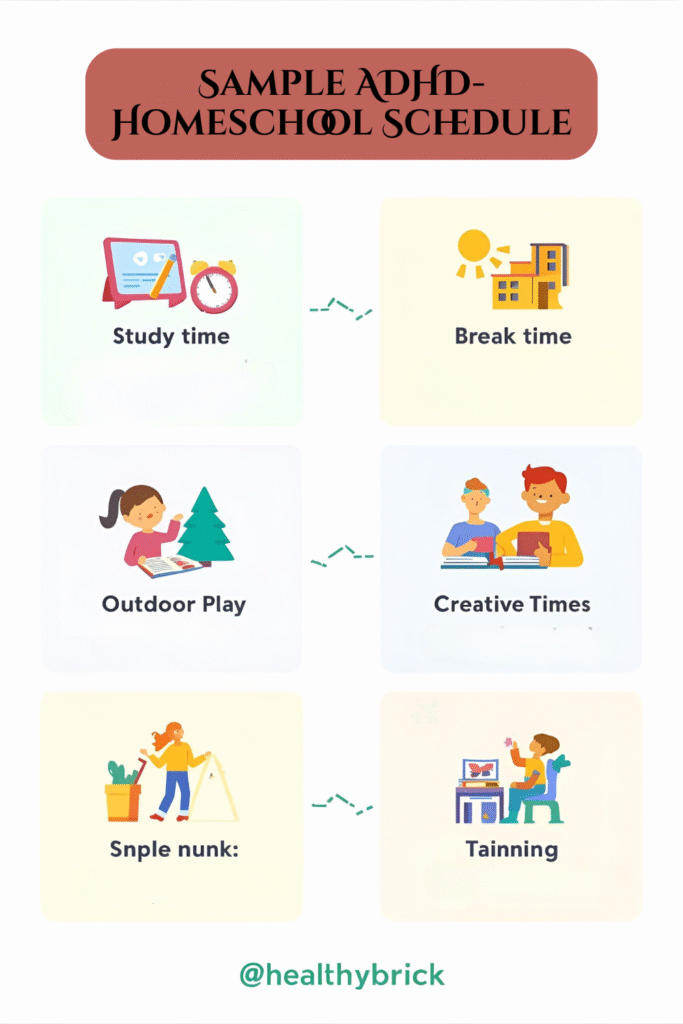
1. Create a Simple, Flexible Homeschool Schedule
A predictable daily routine provides structure, which helps children with ADHD feel secure and understand what to expect. At the same time, too rigid a schedule can backfire.
- Design time blocks for study, creative activities, movement, and relaxation.
- Visual schedules with icons (e.g., book icon for reading time) help children see their day at a glance.
- Include flexibility for when your child struggles with a particular task, allowing them to move to the next subject or take a break.
For example, instead of “Math from 9–10 AM,” write “Math – 20 minutes focused work, then 10 minutes movement break.” This reduces overwhelm and keeps your child more engaged.
ADHD Toolkit for Women: (3 Books in 1) The Ultimate Transformation:

2. Use Visual Timers to Improve Time Management and Focus
Many children with ADHD have difficulty understanding abstract time concepts like minutes ticking by. Visual timers show time passing as a visual countdown.
- Tools like Time Timer or simple sand timers are helpful.
- For example, set a visual timer for 15 minutes of reading, clearly showing time left.
- Combine visual timers with positive reinforcement, such as praising your child when they finish a session.
This method makes time more tangible and helps your child focus better.
3. Incorporate Movement Breaks Regularly
Children with ADHD often have excess energy and shorter attention spans. Movement breaks help reset their focus, improve mood, and increase attention during study sessions.
- Schedule movement breaks every 20–30 minutes.
- Examples: jumping jacks, stretching, walking, or dancing to a favorite song.
- Allow your child to choose activities they enjoy for better participation.
Instead of viewing movement as a distraction, think of it as an essential tool that helps your child reset and stay engaged.
4. Set Realistic, Achievable Goals
Big tasks can feel overwhelming to a child with ADHD. Breaking tasks into smaller, achievable steps keeps them motivated and provides frequent feelings of accomplishment.
The ADHD Guide to Career Success 2nd Edition
- Example: Instead of assigning a full essay, break it down into “Write three sentences about the topic.”
- Use checklists to track tasks visually.
- Celebrate small milestones with stickers, extra playtime, or verbal praise.
These small successes build confidence and reduce resistance.
5. Create a Calm, Organized Homeschool Space
An organized, minimal workspace reduces visual and sensory distractions that overwhelm children with ADHD.
- Keep only essential supplies on the desk.
- Use soft, indirect lighting to reduce glare and sensory overload.
- Include calming elements like a small plant, fidget tools, or noise-canceling headphones.
A clean, consistent space helps your child focus by minimizing external distractions.
6. Leverage ADHD-Friendly Learning Apps
Educational apps designed for ADHD kids can simplify organization, provide visual reminders, and make learning interactive.
- Popular apps: Brili Routines, ClassDojo, Epic!
- Use habit trackers and visual planners to break down tasks into manageable parts.
- Interactive learning apps with games engage your child’s attention while reinforcing concepts.
Apps help make learning structured, enjoyable, and promote independence.
7. Use Positive Reinforcement to Encourage Progress
Positive reinforcement shifts the focus from mistakes to achievements, building self-esteem and promoting good habits.
- Praise your child’s effort and progress often.
- Implement a reward system, such as earning stickers for completed tasks.
- Avoid punishment; instead, emphasize what your child did well.
For example, say “I’m proud of you for reading three sentences today!” rather than focusing on what wasn’t done.
8. Manage Meltdowns Calmly and Effectively
Meltdowns are common when children with ADHD feel overwhelmed or frustrated.
- Identify potential triggers like sensory overload or difficult assignments.
- Prepare a calming corner with soft lighting, noise-canceling headphones, or fidget toys.
- Teach deep breathing or mindfulness exercises to help your child self-soothe.
Respond calmly and supportively, rather than with anger or impatience, to help your child feel safe and understood.
9. Incorporate Hands-On Learning Activities
Kids with ADHD often learn better by doing rather than sitting and listening.
- Science experiments, interactive storytelling, and art projects provide hands-on engagement.
- Use manipulatives like building blocks or flashcards to teach math or language skills.
- Incorporate movement into lessons, like hopscotch math or acting out history events.
These activities make abstract concepts concrete and help your child stay engaged longer.
10. Prepare ADHD-Friendly Meals to Support Focus
What your child eats impacts their energy and ability to focus.
- Choose high-protein snacks like nuts, yogurt, or cheese to stabilize blood sugar.
- Balanced meals: Include protein, whole grains, and vegetables.
- Avoid processed sugar and high-carb snacks that cause energy crashes.
For example, a plate with scrambled eggs, whole-grain toast, and sliced veggies keeps your child energized for learning.
11. Join an ADHD Support Group for Homeschooling
You don’t have to do this alone. ADHD support groups provide valuable resources and emotional support.
- Local or virtual support groups allow you to connect with other parents.
- Share tips, strategies, and resources.
- Attend workshops or webinars led by experts.
Being part of a support group reduces feelings of isolation and helps you discover new ideas.
12. Implement Sensory-Friendly Strategies
Some kids with ADHD are sensitive to sounds, lights, or textures, which can make learning environments overwhelming.
- Use noise-canceling headphones during independent work.
- Provide tactile learning materials like textured flashcards or clay for writing practice.
- Allow standing desks or soft seating options.
These small adjustments help reduce sensory overload and promote comfort.
13. Choose ADHD-Friendly Books That Capture Attention
Not all books are created equal when it comes to kids with ADHD.
- Look for books with short chapters, clear language, and colorful illustrations.
- Interactive books with questions, prompts, or hands-on activities keep the child engaged.
- Recommended: “The Survival Guide for Kids with ADHD” by John F. Taylor.
Such books make reading less overwhelming and more enjoyable.
14. Break Homework Into Small Segments
Instead of assigning large chunks of homework, divide it into smaller, manageable parts.
- Use a visual checklist to mark off completed tasks.
- Set a timer for each segment to keep your child on track.
- Allow short breaks between segments to prevent frustration.
This approach reduces battles and increases productivity.
15. Build a Consistent Routine for Stability
A consistent routine is one of the most powerful tools for successful ADHD homeschooling.
- Start and end school at the same time every day.
- Maintain the same order of subjects to build familiarity.
- Incorporate regular breaks, meals, and playtime.
Predictability helps your child feel safe and improves focus over time.
Conclusion
Homeschooling a child with ADHD doesn’t have to be overwhelming. With patience, the right strategies, and a supportive approach, you can create a positive and effective learning experience. From structured schedules and visual timers to positive reinforcement and sensory-friendly spaces, each of these 15 tips contributes to a balanced and productive homeschool routine. Start implementing these strategies today and watch your child thrive.
