
Learn the real ADHD symptoms in women and how they often get overlooked. This guide explains the emotional, mental, and everyday signs of ADHD in women in a human, relatable way, with examples, FAQs, and support-oriented insights.
When most people picture ADHD, they imagine a restless school-age boy bouncing in his chair. Because of that old stereotype, ADHD symptoms in women are often misunderstood or brushed aside as stress, moodiness, or “busy life problems.” Many women grow up thinking something is wrong with them without ever knowing that their brain simply works differently.
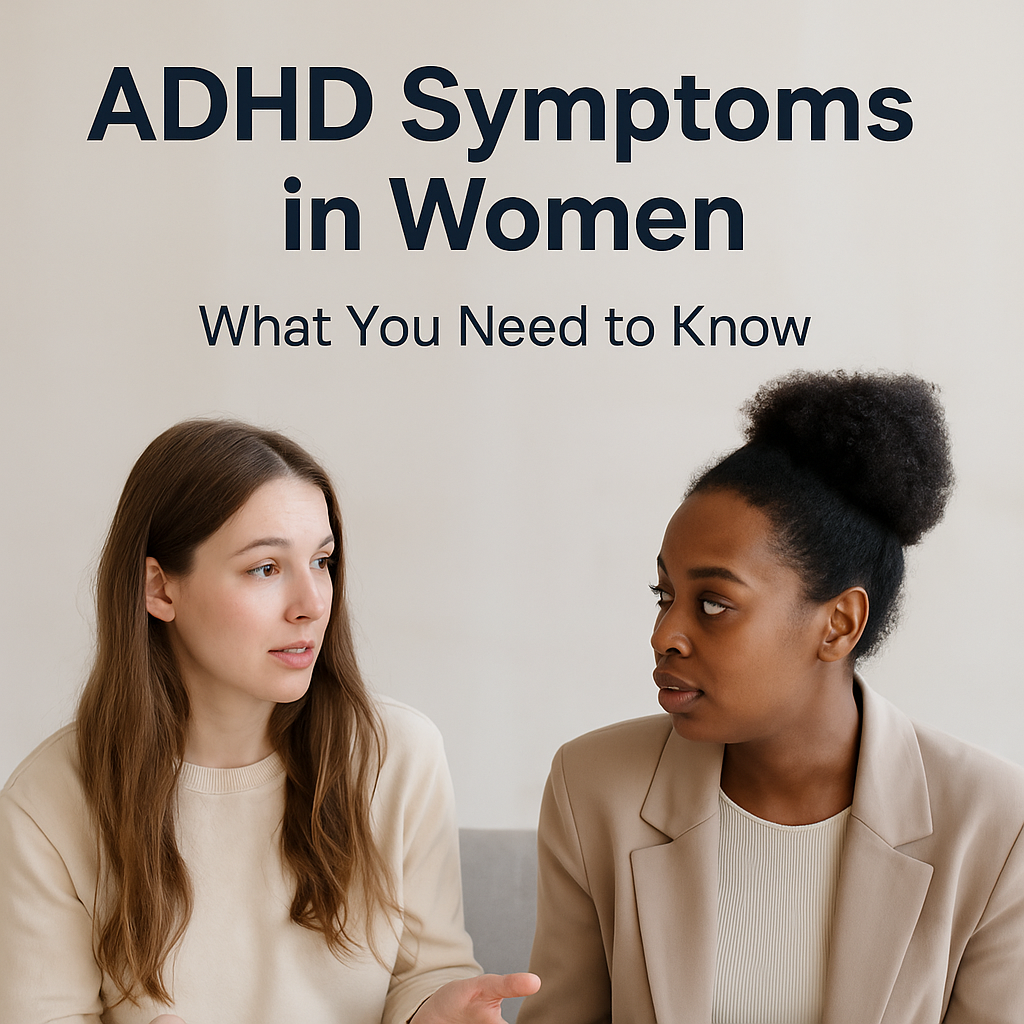
This article walks you through what ADHD actually looks like for women. The goal isn’t to label anything as “good” or “bad.” It’s to help you make sense of patterns you may have lived with for years. And if you see yourself in these descriptions, you’re definitely not alone.
How ADHD Symptoms in Women Typically Show Up
Let’s take a closer look at the everyday experiences and emotional patterns that may point to ADHD symptoms in women. These aren’t clinical checklists. They’re lived realities that many women quietly manage.
Also Know: Homeschooling for ADHD Kids
1. The Constant Loop of Overthinking
One of the most common experiences for women with ADHD is the mental spiral. You replay conversations over and over, wonder whether you said the wrong thing, or worry about something small that happened days ago. It isn’t that you’re overly dramatic. It’s that your mind rarely rests.
Even when you’re exhausted, your brain keeps running as if someone left the lights on. This is mental hyperactivity. You don’t see it from the outside, but you feel it every minute.
2. Emotional Waves That Feel Bigger Than They “Should”
Women with ADHD often feel things with extra intensity. A simple change in plans can feel overwhelming. A small criticism can sting for hours. You might bounce between feeling capable and feeling discouraged in the same afternoon.
This isn’t a weakness. It’s the emotional side of ADHD that rarely gets talked about. Because women tend to mask their struggles, these emotional waves often happen in silence.
3. Trouble Figuring Out What to Prioritize
You know the feeling: everything on your list seems urgent, yet none of it seems doable. You try to start a task but end up frozen because you don’t know which one matters most.
12 Tips To Overcome ADHD in Kids
This isn’t laziness or carelessness. It’s difficulty with executive function. Many women grow up hearing they’re “disorganized” when the truth is that their brain just needs support, not judgment.
4. Forgetfulness That Looks Small but Feels Heavy
Misplacing your phone, forgetting to reply to a message, missing appointments, or losing track of simple errands are classic ADHD symptoms in women. The forgetfulness is real, but what hurts more is the guilt that follows. Many women start believing they’re failing at adulthood.
The truth is far gentler. ADHD affects working memory, and that’s not something you can fix with willpower.
5. Being Either Very Social or Quietly Reserved
Women with ADHD often land on one side of a wide social spectrum. Some talk a lot to keep the conversation flowing or to avoid awkward silence. Others withdraw because social interactions feel draining.
Both patterns come from the same place: managing internal overwhelm.
6. Perfectionism That Hides the Chaos
Many women develop perfectionism as a coping skill. You may spend hours making something look “just right” because it helps you feel in control.
But behind the scenes, daily routines still feel messy. That gap between how you appear and how you feel inside creates a constant emotional weight.
7. Strong Sensitivity to Rejection
Rejection Sensitive Dysphoria (RSD) isn’t an official diagnosis, but it’s very real for many women with ADHD. A small comment can feel like a personal failure. You might worry often about disappointing people or being misunderstood.
It’s not neediness. It’s a real emotional response shaped by years of trying to “keep it together.”
8. Struggling to Start or Finish Tasks
You want to start. You genuinely care. But it feels like pushing a car without fuel. And when you finally begin, staying consistent becomes its own challenge. Many women describe this as feeling “lazy,” even when they know they work twice as hard to keep up with others.
Your motivation system works differently. Tasks don’t activate until something sparks your interest, urgency, or emotion.
9. Hyperfocus That Takes You Deep Into One Thing
Women often experience hyperfocus in areas they love — work projects, creative hobbies, organizing something specific. Hours pass like minutes.
Hyperfocus is a strength, but it can also pull attention away from other responsibilities. It isn’t intentional. It’s your brain locking in on something that lights up your interest pathways.
10. Tired Even When You Aren’t Physically Busy
Living with ADHD is tiring. The constant self-monitoring, the emotional effort, the mental juggling — all of it takes energy. Many women describe feeling drained even after a full night’s sleep.
This isn’t “just stress.” It’s neurological fatigue.
11. Routines That Refuse to Stay Consistent
Some days you’re on top of everything. Other days you can’t follow even simple routines like waking up at the same time or eating on schedule. Hormone shifts make this even harder.
This unpredictability doesn’t mean you lack discipline. It’s another example of how ADHD affects daily life in subtle ways.
12. A Lifelong Feeling of Being “Different”
Many women talk about sensing something was different about them — not in a dramatic way, but in the quiet moments. They felt like they were always trying harder than everyone else yet never catching up.
Getting clarity isn’t about labeling yourself. It’s about finally understanding why things felt harder than they looked.
Why ADHD Looks Different in Women
There are a few reasons women get overlooked:
- Girls are taught early to behave, sit still, and be responsible, so they learn to mask.
- Girls tend to internalize their symptoms instead of acting out.
- Hormonal shifts throughout life make symptoms fluctuate.
- Society expects women to be organized and emotionally stable, leading them to hide their struggles.
For many women, this leads to late diagnosis — sometimes not until their 30s, 40s, or even later.
FAQ About ADHD Symptoms in Women
1. Can ADHD develop in adulthood?
ADHD doesn’t suddenly appear in adulthood. It has to be present since childhood, but many women learn to cope so well that symptoms become noticeable only when life gets busier.
2. Are ADHD symptoms different during PMS or menopause?
Yes. Hormonal changes can make symptoms stronger. Many women feel more scattered, emotional, or overwhelmed around hormone shifts.
3. Can you have ADHD without hyperactivity?
Absolutely. Many women have the inattentive type, where hyperactivity shows up internally through overthinking instead of physical restlessness.
4. How is ADHD diagnosed in women?
A mental health professional evaluates your history, behavior patterns, daily challenges, and symptom timeline. Diagnosis isn’t based on one test but on a full picture of your life.
5. Does untreated ADHD affect mental health?
Yes. It can contribute to anxiety, depression, burnout, low self-esteem, and emotional exhaustion. Early support makes a big difference.
Conclusion
Understanding ADHD symptoms in women isn’t just about checking a list. It’s about recognizing the emotional, mental, and everyday patterns you may have lived with for years without answers. Women often carry these struggles quietly and blame themselves for things that are rooted in brain chemistry, not character flaws.
If you see yourself in these signs, it’s worth exploring further with a professional. The goal isn’t to label yourself. It’s to understand your brain so you can work with it instead of against it.
