
Homeschooling a child with ADHD can feel like running a marathon with no map. Some days flow beautifully. Other days feel scattered from the moment you wake up. Many parents assume the problem is the curriculum, but in most cases, the real struggle is the lack of ADHD homeschool routines that match how an ADHD brain works.
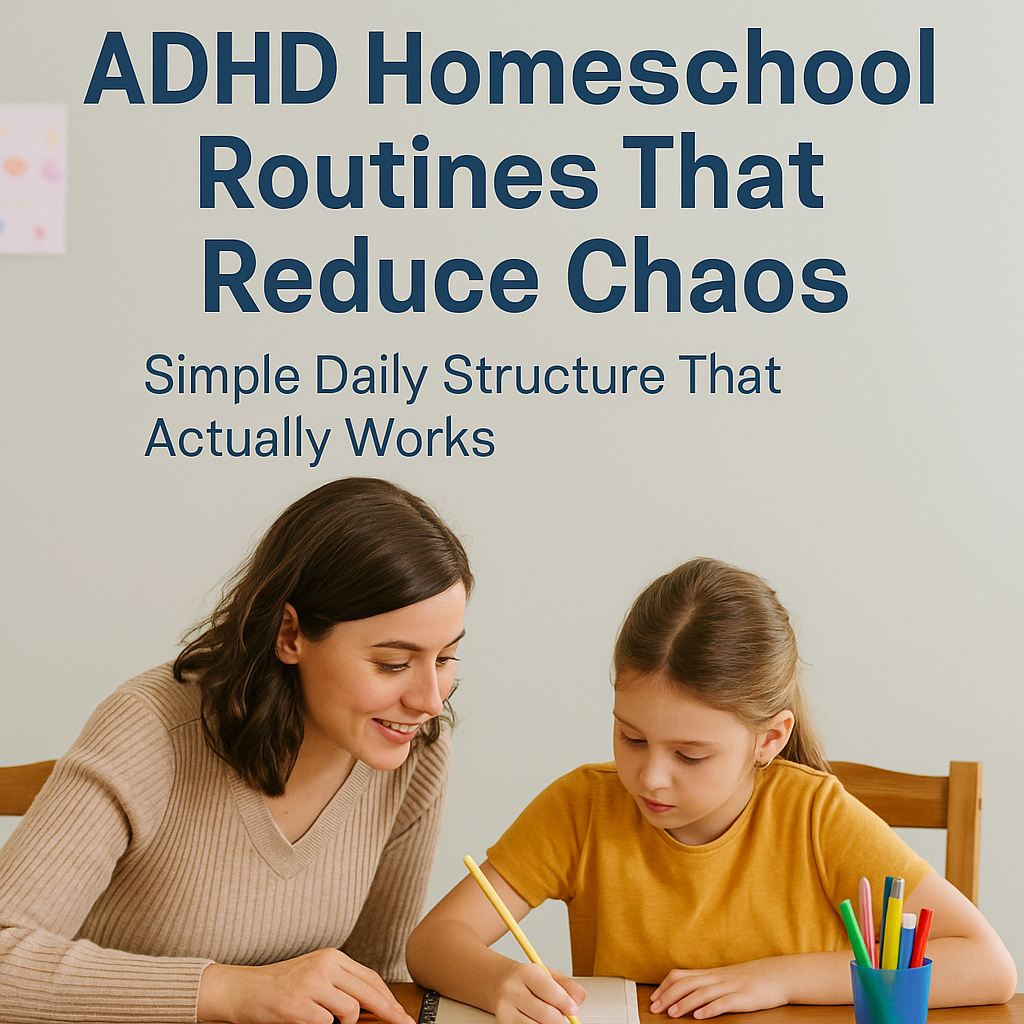
The truth is simple: once your day has a predictable rhythm, everything becomes easier. Transitions soften, behaviors improve, learning feels less overwhelming, and your stress level drops. ADHD homeschool routines don’t eliminate challenges, but they do give your child—and you—a stable foundation to work from.
This guide walks you through how ADHD-friendly homeschool routines can transform your days, even if nothing else has worked so far.
Why ADHD-Friendly Homeschool Routines Matter
Kids with ADHD rarely thrive in rigid schedules. At the same time, they also struggle without structure. This is where ADHD-friendly homeschool routines come in. They strike the balance between predictability and flexibility, giving your child enough guidance to feel safe while allowing space for the natural ups and downs of ADHD.
These routines matter because they:
- Reduce chaos and emotional overload
- Help your child understand what comes next
- Lower resistance to starting tasks
- Make transitions smoother
- Reduce the mental load on you
- Build habits that support long-term focus and independence
When routines match ADHD needs, homeschooling becomes far more manageable—and far less chaotic.
1. Build the Day Around Micro-Blocks Instead of Long Lessons
One of the most effective ADHD homeschool routines you can introduce is switching from hour-long lessons to micro-blocks. ADHD brains work best in short, predictable bursts. Long sessions drain their energy and often lead to frustration.
A micro-block routine might look like:
- 10 minutes: lesson
- 2 minutes: stretch
- 10 minutes: reading
- 2 minutes: quick reset
- 10 minutes: math activity
- 5 minutes: movement break
These small blocks reduce pressure and make learning feel doable. Your child isn’t staring down a long, overwhelming lesson. Instead, they see short, manageable steps that help reduce emotional resistance.
2. Create a Daily Anchor to Ground the Whole Routine
Instead of trying to structure every moment, choose one daily anchor that stays the same no matter what. Anchors are central parts of ADHD homeschool routines because they bring stability even on unpredictable days.
Anchor ideas include:
- Morning routine
- Start-of-school checklist
- Lunchtime reset
- End-of-day reflection
A simple morning anchor might be:
- Fill water bottle
- Pick a fidget
- Do three deep breaths
- Review daily plan
- Start with the easiest subject
This consistent starting ritual helps your child’s brain ease into the day instead of feeling thrown into learning.
3. Use Visual Routines to Support Transitions
Transitions are one of the hardest parts of homeschooling kids with ADHD. That’s why ADHD-friendly homeschool routines rely heavily on visual cues.
Visual supports include:
- Timers
- Picture schedules
- Sticky-note checklists
- Color-coded subjects
- A “You’re almost done” card
- A “Next up” card
Visuals reduce the stress of switching tasks. They replace verbal reminders, which often feel like nagging to ADHD children, with clear, calming cues.
4. Start With Movement to Prep the Brain for Learning
One of the easiest ways to improve ADHD homeschool routines is to build movement into the start of the day. When the body moves, the brain wakes up, making learning far easier.
Movement starters might include:
- A short walk
- Dance session
- Jump rope
- Indoor obstacle course
- Yoga stretch
- Five-minute trampoline bounce
Kids who move first settle into learning more smoothly than kids asked to sit down immediately.
5. Create a Calm Learning Nest Instead of a Traditional Desk
Many kids with ADHD don’t focus well at a typical desk. A learning nest—a cozy, distraction-light space—fits more naturally into ADHD-friendly homeschool routines.
Your learning nest may include:
- Pillows or beanbags
- Soft lighting
- Headphones
- A lap desk
- Sensory tools
- A blanket
A comfortable environment keeps your child calm, grounded, and more open to learning.
6. Use a “Done Basket” to Increase Motivation
A simple but powerful tool in ADHD homeschool routines is the “done basket”—a place where your child puts completed work.
It helps with:
- Visual progress
- Daily organization
- Reducing clutter
- Encouraging independence
- Creating a sense of accomplishment
Seeing the done basket fill up each day boosts motivation more than you might expect.
7. Use Theme Days to Structure the Week
Weekly structure helps ADHD kids feel more confident. Theme days are a friendly, flexible way to add structure to your ADHD-friendly homeschool routines.
Examples:
- Math Monday
- Writing Tuesday
- Science Wednesday
- Reading Thursday
- Project Friday
Theme days simplify planning and help reduce overwhelm for both child and parent.
8. Keep the Day Shorter Than Traditional School
Long days are rarely effective in ADHD homeschool routines. Three focused hours at home can exceed six distracted hours in a classroom.
Shorter days:
- Improve attention
- Reduce emotional overload
- Build consistency
- Allow time for hobbies
- Keep motivation high
Quality learning always beats quantity.
9. Provide Predictable Breaks—Not Random Ones
Breaks should be built into your ADHD-friendly homeschool routines, not given only when things fall apart. Predictability helps children regulate their energy and attention.
Break ideas include:
- Music
- Stretching
- Drawing
- Snack
- Outdoor play
- Building blocks
When your child knows a break is coming, they’re more willing to stay engaged.
10. End With a Reflection Routine to Close the Day Smoothly
A small reflection ritual is the perfect closing step in ADHD homeschool routines. It brings the day to a gentle finish and builds emotional awareness.
Try asking:
- What went well today?
- What felt challenging?
- What made you proud?
Reflection helps your child process the day instead of carrying frustration into tomorrow.
Frequently Asked Questions
1. How do I create ADHD homeschool routines if my child resists structure?
Start with just one anchor routine. Once that becomes familiar, add simple steps one at a time.
2. Should every day follow the same pattern?
The flow should be consistent, but the details can stay flexible. ADHD-friendly homeschool routines work best when predictable but not rigid.
3. How long should lessons be?
For most ADHD learners, 8–15 minutes is ideal. Micro-blocks keep frustration low and interest high.
4. What if my child refuses to transition?
Use visual cues and one-minute warnings to soften the switch. Sudden transitions often trigger overwhelm.
5. Can these routines work with any curriculum?
Yes. Routines shape the day, while curriculum fills it. You can use these strategies with any learning approach.
Conclusion
Effective ADHD homeschool routines don’t rely on strict schedules. They rely on rhythms that match how ADHD brains work—short lessons, movement, visual supports, predictable breaks, and calm spaces. When you shift from managing chaos to building ADHD-friendly homeschool routines, learning becomes more peaceful and your home becomes lighter.
Start small. Keep it flexible. Build a routine that grows with your child.
The calmer days you’re hoping for are absolutely possible.
