
Learn the 9 things not to say to someone with ADHD. Discover why these common phrases hurt neurodivergent brains and what supportive words to use instead.
Even when we care deeply about someone, everyday words can unintentionally land like criticism—especially when spoken to a child, partner, or friend navigating Attention-Deficit/Hyperactivity Disorder.
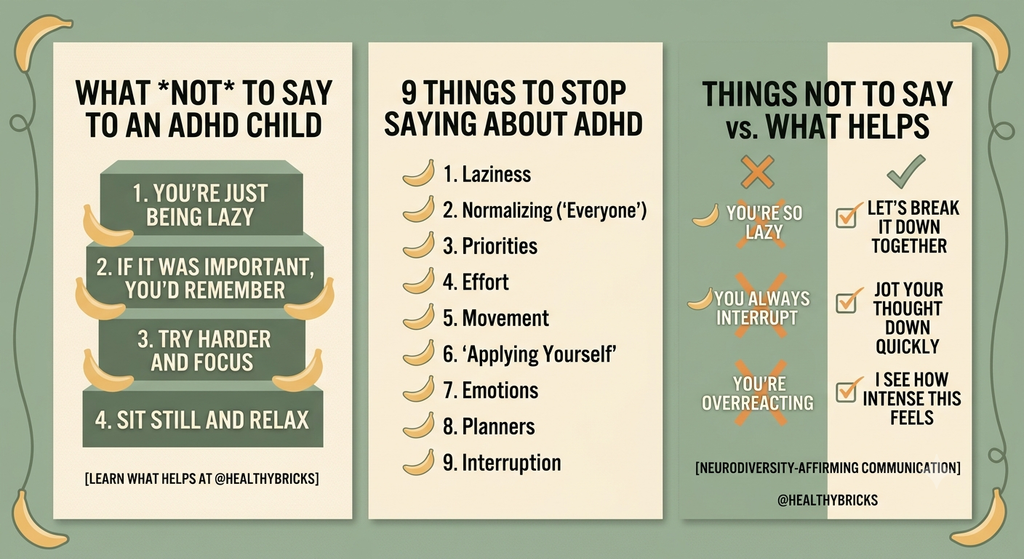
Because ADHD affects invisible executive functions such as working memory, time perception, and emotional regulation, real neurological hurdles are often mistaken for carelessness or a lack of effort.
Knowing the 9 things not to say to someone with ADHD is one of the most practical ways to replace friction with genuine understanding.
When someone with ADHD hears dismissive remarks repeatedly, those phrases quietly erode their confidence and deepen feelings of shame.
5 Things ADHD Parents Can Do Instead of Yelling
By learning what not to say to someone with ADHD—and swapping those habits for compassionate, neurodiversity-affirming language—you create a safer environment where they feel supported rather than judged.
Below is a complete guide to the 9 things not to say to someone with ADHD, why each phrase misses the mark, and what to say instead.
Why Words Matter When Supporting Someone With ADHD
Before diving into the specific 9 things not to say to someone with ADHD, it helps to understand why verbal feedback carries so much weight for neurodivergent minds.
Research suggests that children with ADHD receive thousands more corrective or negative comments by age twelve than their neurotypical peers.
Over time, that constant stream of correction wires the nervous system to expect criticism.
Many people with ADHD also experience Rejection Sensitive Dysphoria (RSD), an intense emotional pain triggered by perceived disapproval or failure.
When we choose our words intentionally, we lower their nervous system’s alarm bells and focus on practical problem-solving instead of blame.
The 9 Things Not to Say to Someone With ADHD
1. “You’re Just Being Lazy”
Labeling an executive function struggle as laziness is at the very top of the list of 9 things not to say to someone with ADHD.
What looks from the outside like avoiding a simple task is usually ADHD paralysis—a cognitive freeze where the brain feels overwhelmed by where to begin or lacks the dopamine required to initiate movement.
- Why it hurts: They are often fighting an exhausting internal battle just to start, and being called lazy makes them feel defective rather than helped.
- What to say instead: “It looks like getting started feels heavy right now. Would it help if we broke this down into one tiny first step together?”
2. “Everyone Is a Little ADHD These Days”
While often meant to normalize their experience, this comment minimizes a legitimate, lifelong neurodevelopmental condition.
Everyone misplaces their keys occasionally, but not everyone deals with chronic time blindness, working memory bottlenecks, and daily nervous system overload.
- Why it hurts: It dismisses real neurological challenges and implies they should simply push through struggles that genuinely impact daily life.
- What to say instead: “I know your brain processes things differently than mine, and I want to understand how that feels for you.”
3. “If It Was Important to You, You Would Have Remembered”
People with ADHD frequently forget appointments, text messages, or household errands—even when they care deeply about the people involved.
Working memory deficits mean a thought can vanish the exact second a new distraction enters the room.
- Why it hurts: Equating memory with love attaches moral guilt to a neurological memory glitch.
- What to say instead: “I know you care about this. Let’s set a visual reminder or shared calendar alert so your brain doesn’t have to hold onto it alone.”
4. “You Just Need to Try Harder and Focus”
Telling someone with ADHD to simply focus is like telling someone who needs glasses to squint harder.
ADHD is not a shortage of attention; it is difficult to regulate where attention goes. An ADHD brain can hyperfocus on an engaging project for hours while struggling to read three lines of a repetitive form.
- Why it hurts: Most people with ADHD are already exerting twice the mental energy of their peers just to keep up with routine expectations.
- What to say instead: “What kind of environment or background setup helps your brain lock into this task right now?”
5. “Why Can’t You Just Sit Still and Relax?”
Hyperactivity is not always visible bouncing—in older kids and adults, it frequently shows up as internal restlessness, racing thoughts, or an urge to fidget.
Forcing physical stillness actually drains mental energy and makes it harder for an ADHD brain to listen and retain information.
- Why it hurts: Movement is how a neurodivergent nervous system self-regulates and stays alert.
- What to say instead: “Feel free to doodle, pace, or use a fidget while we talk—whatever helps you feel comfortable.”
6. “You Have So Much Potential, If Only You Applied Yourself”
This familiar phrase follows many people from childhood report cards straight into adulthood. Even when spoken with encouragement, it highlights a painful gap between intelligence and consistent execution.
Follow us on: Instagram
- Why it hurts: It frames executive dysfunction as a character flaw and leaves them feeling like a chronic disappointment.
- What to say instead: “I see how creative and capable you are. Let’s figure out what tools or routines will make it easier for you to showcase your strengths.”
7. “You’re Overreacting—Calm Down”
Emotional dysregulation is a core, often overlooked part of ADHD. When frustration, embarrassment, or sensory overload hits, emotions arrive fast and intensely. Being told to “calm down” rarely soothes an overwhelmed nervous system.
- Why it hurts: It invalidates real emotional intensity and triggers immediate defensiveness or shame.
- What to say instead: “I can see this feels really intense right now. Take a breath—I’m right here with you until the wave passes.”
8. “Why Did You Buy Another Planner If You Never Use Them?”
People with ADHD often buy new notebooks, apps, and organizational tools in search of a system that finally sticks.
Novelty gives the ADHD brain a temporary burst of dopamine, which naturally fades once the routine becomes predictable.
- Why it hurts: Mocking past attempts discourages them from experimenting to find systems that actually work for their brain.
- What to say instead: “Every brain needs fresh ways to stay organized. What feels easiest and most visible for you to use this week?”
9. “You Always Interrupt—You Never Listen to Anyone”
Rounding out the things not to say to someone with ADHD is accusing them of deliberate rudeness when they interrupt.
Because working memory holds thoughts for only a brief window, someone with ADHD often speaks immediately out of genuine fear that their thought will disappear before their turn arrives.
- Why it hurts: It assumes selfishness when the behavior is actually driven by impulse control and fleeting memory.
- What to say instead: “I want to hear your thought! Jot a quick note or hold up a finger so we don’t lose it while I finish this sentence.”
Quick Reference: Phrases to Avoid vs. Supportive Alternatives
Keeping these shifts top of mind makes everyday conversations smoother and far less stressful for everyone involved.
| One of the Things Not to Say to Someone With ADHD | Supportive Alternative That Helps |
| “You’re just being lazy.” | “Let’s break this into one tiny first step together.” |
| “Everyone is a little ADHD.” | “I want to understand how your brain experiences this.” |
| “If you cared, you’d remember.” | “Let’s set up a visual cue so you don’t have to hold it in your head.” |
| “You just need to try harder.” | “What setup helps your brain focus right now?” |
| “You’re overreacting—calm down.” | “I see how intense this feels right now. Take your time.” |
Frequently Asked Questions About What Not to Say to Someone With ADHD
Why is it important to learn the 9 things not to say to someone with ADHD?
Understanding the 9 things not to say to someone with ADHD helps prevent accidental shame and defensiveness.
Because ADHD affects executive functions rather than willpower, shifting from critical remarks to collaborative language improves trust, self-esteem, and daily follow-through.
How do I apologize if I accidentally used one of these phrases?
Keep your repair simple, honest, and free of guilt-tripping. You can say, “I realized what I said earlier sounded dismissive of how hard your brain works. I’m sorry—how can I support you better right now?”
How can I remind someone with ADHD about tasks without sounding like I am nagging?
Replace repeated verbal reminders with external visual cues. Shared digital calendars, sticky notes on the front door, whiteboards in high-traffic areas, and agreed-upon phone alarms take the pressure off both of you.
Final Thoughts on Supporting Neurodivergent Minds
Memorizing the 9 things not to say to someone with ADHD is not about walking on eggshells or lowering expectations. It is about separating a person’s character from their brain’s wiring.
When we trade judgmental assumptions for curiosity, patience, and practical structure, we give the neurodivergent people in our lives the safety they need to build confidence and thrive.
